Sunday, 27 November 2011

I'm Thankful For...


It's daunting being a doctor. Sure there is the respect, and yes there is a steady income, but no one tells you about the threat of constant upheaval. No one warns you that with new phase of your training, you run the risk of moving to a completely different part of the world. And with that risk, your social life becomes a pinball machine of scattered friends and family. The odds are against you - chances are you will grow apart from your closest friends, and your relationship will come to a crossroads: to stay together or move both your lives across country together. 

So here's to hoping that your boyfriend/husband is either a very successful business man who can request to transfer wherever he wants, or alternatively, unemployed.

I know a registrar who's consigned his life to being a wild single man who lives for weekends of debauchery. That is until he gets a consultant number and he can finally live out his dream of settling down. He's 28 and still waiting for that number. For a man that's fine. For a woman… In lectures they teach us that a woman is at her most fertile, her prime reproductive state, at 19 years old. I turn 24 in a couple weeks and my eggs are rapidly dying off as I type this.

But it's no biggie! I'm thankful for the change. The idea of a brand new unexplored city is very exciting and I'm impatient to start my training (slash receive a salary). More importantly, I'm thankful for the individuals I've come to love and adore. Although the thought of losing touch over the course of our foundation years and speciality training devastates me, I've at least got some pretty spectacular memories. For example, I'll look back to this weekend and think of our epic Thanksgiving dinner. I'll picture that table groaning under the weight of nine side dishes, four puddings and an 8kg titan called Thomas the Turkey, and then imagine all 16 of us on the floor, eyes glazed over and cradling our little food babies (Thomas Jrs). Plus a side shot of the 14 bottles of wine in the corner. 

So here's to our future as FY doctors! In the next 10 days, when our FPAS applications come through, may we are all be placed exactly where we want to be placed, and if it's not, that it will turn out to be a blessing in disguise. Even if we're stuck in Buckfuck, UK. Happy Thanksgiving!

Friday, 11 November 2011

Cardiac Arrest


Just saw my first cardiac arrest and death. While they were pushing the adrenaline, one of the doctors goes "pH of 6.98" and then made a hand gesture slicing across his neck. 

The death of a man doesn't really bother me. I understand that at 87 years old, he was at the end of his life and this was meant to be a procedure that would give him another 5 or 10 years more. But what freaks me out is the way the cardiologist reacted - consultant refused to tell the emergency contact that her friend had just died, and was very keen to move on to the next procedure. 

"We're behind schedule, let's move over to the other cath lab. The nurses will clear up this mess." 

Is that what happens when you've seen death too many times? That you don't even respect it anymore? That's screwed up.

Friday, 4 November 2011

Finding The One


A senior registrar was standing next to me during an angiogram. At one point he mutters "beautiful" under his breath. I asked him what he was referring to and he replied "the moment the needle hits the femoral artery and the blood comes out of the other end in a pulsing gush". He repeated that it was a beautiful sight, and that as weird as it sounds, cardiology just turns him on. 

Later, a different registrar asked me if I had any idea what speciality I wanted to do. I replied honestly with O&G. She smiled at me and said "don't worry, we'll change that." The confidence she has in the allure of cardiology is incredible. 

This rotation I've realised that you can't force your love for medicine. This cardiology rotation has been one of my favourites, and I have enjoyed respiratory, paediatrics, even gastro and ortho on previous rotations. But nothing gets me going like obstetrics. C-sections make me want to jump out of bed at 6 in the morning, and stay on the labour ward until well past 5PM. And gynaecology makes my heart swell, especially when you reassure a patient that she can still have children. Honestly, the fact is I just don't feel the same about an angiogram or a funky coloured sputum sample. 

Finding the speciality you will commit the rest of your life to is just like what they say about Mr. Right - when you've found it, you'll just know it's The One. 

Thursday, 3 November 2011

Highlight of My Week

On the ward round with the cardiology team, one of the patients looked particularly oedematous. She seemed fluid overloaded so I wrote up a blood form to check her electrolytes before the team could increase her diuretics.

I found the nurse to ask her to take the blood sample, and she said "Sure! I've got a medical student with me, he'll do it." She took my request, turned to the other student and passed him the form I had just written up...

HAH! I'm delegating my jobs to medical students, so I'm basically already a real doctor.


Sometimes it sucks to be a medical student because no one knows your name, no one cares that you exist. Today was not one of those days.

Saturday, 22 October 2011

One day in Cardiology


The ECHO Meeting. They pulled up the images of a patient with a mahooooosive post-MI right ventricular anuerysm with a laminar thrombus. She needs to get corrective surgery before her heart literally bursts. Or collapses from a stroke when that thrombus shoots up into her brain. 

The Cardiology Patients. The consultant had a private patient admitted for shortness of breath. On examination, he had splinter haemorrhages on his nails, a ventricular heave, and tricuspid regurgitation (pan-systolic murmur loudest in the tricuspid region - and I identified it!). Later on, we were notified that the patient had deteriorated and had become dyspnoeic and anuric with an ABG lactate of 6. I watched as the consultant immediately ran off to make sure his rich little private patient didn't crash and die on him. 

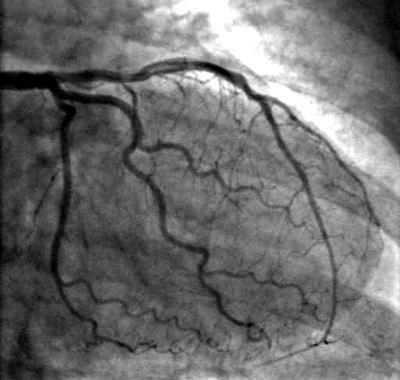
The Catheter Lab. Angiograms, where contrast is injected into the chambers of the heart and its own blood supply. Isn't it weird to think that the heart needs to pump blood to itself too? I watched as the coronary arteries filled to outline the shape of the heart, while the ventricle pumped out blood in real time. Then the insertion of a dual-chamber pacemaker. When checking for stabilisation, the doctors asked the patient on the operating table to cough. Turns out the patient was fully conscious despite having electric wires were being twisted into his heart muscle.  

The science of the heart is remarkably straightforward - a muscular pump that pushes blood throughout your body. We take it for granted that it functions perfectly, but we forget that with each heartbeat, things could go terribly wrong.


A coronary angiogram

Thursday, 6 October 2011

Antes y Despues

Before I left for elective, I told my friends I was going to have a defining moment, a tremendous epiphany that would change my life forever. I also told them that whatever it was (a jungle creature, the wise words of a shaman), I was going to immortalise it with a tattoo.

Except nothing happened. I don't have anything symbolic to get inked as a reminder of my 4th year elective. There was no moment where I witnessed the chains of poverty, or the gravity of life. And maybe that's a good thing because now I don't have some cliche tattoo of a jaguar prowling across my back.

But that's not to say I haven't changed. I feel and act the same, but something's different. It's just been such a slight and gradual adjustment that I've hardly noticed it. The only way I can identify it is by doing a before and after, comparing the beginning of the trip to the present, waiting for the last leg of my flights home.


Before, my favorite words were cool, dude, and awesome. 
After, my favorite words are que linda, claro, y buena onda.

Before, I flushed with a clear conscious.
After, I think before I flush, just in case the sewage system can't handle it.

Before, I was listening to the Twelves, Munchi, and Afrojack.
After, I'm listening to reggaeton, electronic tango and a crazy jungle song which loosely translates into I Won't Be Your Handkerchief Anymore.

Before, my Spanish sucked.
After, my cab ride to the airport was about the upcoming elections, lack of democracy, and failings of the Argentinean health system.

Before, I refused to eat an empanada because it looks like a curry puff. 
After, it's no Old Chang Kee, but a freshly baked empanada de lomo picante is pretty damn delicious (Daddy, I'm talking to you).

Before, I hated dancing with a guy.
After, doesn't matter if he's got a pot belly, grey hair, and smells of stale cigarettes - if he marks with clarity and is a creative dancer, I'm going to tango with him all night.

Before, I was excited for a South American romance. 
After, the women are a million times better than the men <3

Before, I could tell the difference between a Peruvian and an Argentinean.
After, I can't tell the difference between a Peruvian, Argentinean, Spaniard, Portuguese, German, Mexican, Haitian, or Indonesian.

Before, I wasn't sure if I'd like South America. 
After, in some parts of Peru I felt like I was back in South East Asia, and I felt more at home with Argentineans than I have with any other culture.

Before, I thought if you gave a villager anti-parasites, they would be grateful.
After, I know some will lie about their symptoms to get more pills and free soap.

Before, I supported NGOs and Western aid. 
After, I realise that without an intimate understanding of the local socioeconomic climate, it's a waste of time, effort and resources.

Before, I thought medicine could save the world.
After, I think clinical medicine on its own hardly changes anything.


So even if I haven't had that defining moment or come back a changed person, these past 10 weeks have been unreal. I know for a fact that never again in my life will I ever have a chance to explore the Amazon like I did in Peru (thank you Amazon Promise). And that I'm going straight back to Argentina the moment I have a chance to because I simply haven't had enough.

Thanks to everyone for following me on my elective. For those of you who care to continue, my next trip is MBBS 5, the last year of medical school. It promises to be complete with the fascinating drama of job application stress, placements in the the middle of nowhere England, and finding ways to make this final year of university (read: freedom) absolutely unforgettable.

But for now - suerte mis amigos, chau sudamerica, and for your listening pleasure... "Ya No Sere Mas Tu Pañuelito"!


Sunday, 25 September 2011

Street vendors of Buenos Aires

Imagine a guy, the most hipster-ish guy you know. Skinny grey jeans, black graphic tee, tall lanky frame.

There's two of them walking down the street. Both of them are carrying those metal keg backpacks you see at stadiums and events to dispense beer from. A car drives by, stops, and the window rolls down. "¿Café chicos? ¡Dos por favor!"

The two hipsters turn around, and instead of beer the metal drums read "Columbian Café." Eyeing up the driver through their red Wayfarers, they decide to walk over. They take their time, lighting up their rolled cigarettes at the crossing. Then, while taking a big drag from his cig, one fills up a styrofoam cup of coffee while the other guy tops it up with sugar. They lean on the side of the car, nonchalantly smoking and chatting while waiting for their change. The driver gives them 4 pesos and they're off, strolling down the road to look for more customers.

Who knew street food could look so wicked? Who knew that in this city, it would be considered cool to walk the streets as roaming baristas. I'll bet they do something similar for wine... Imagine a massive DJ night out, and instead of beer or coffee, hipsters in fluorescent clothes and cool trainers sell wine by the cup. Ha. Only in Buenos Aires...

Friday, 23 September 2011

Tomorrow's my last day in Mendoza. I feel strangely... eh. I'm not sad to go, but neither am I happy. I didn't go out once for drinks, or to a club. I'm almost ashamed to count how many hours I dedicated to the siesta. I never climbed the hill in the park for the "fantastic view," nor did I go skiing/paragliding/rafting, nor did I ever venture into the mountains save for the time I got trapped at the Andean border.

But that's not to say I don't love it here. It's just that the only way I can describe it is "tranquilo." Chill. After those four hectic and draining weeks in the Amazon, Mendoza was exactly what I needed, the perfect remedy for the eternally knackered medical student. I caught up on sleep, read all the (English) books in the house, and spent hours doing nothing but listening to Radiohead.

Not to fear parents, I wasn´t a complete waste of your hard-earned money! Mira. Look: I cooked empanadas, baked alfajores, danced tango in a milonga, tried mate (tea-loved it), tried frenet (liquor-hated it), tucked into appetizers at 10pm, devoured massive chunks of steak from an asado, developed an appreciation for red wines... And I've been immersed in so much Spanish that certain words no longer come out in English! A typical sentence now sounds like "Pero no, no es her falta porque ella tried her best.

Here's my daily schedule: hospital in the morning, tanning on the rooftop terrace, seista for a couple hours in the afternoon, visit to the gym, and a tango lesson at night. One weekend I just watched films and saw a rather mediocre dance perforamance. The next I went to a tango show. Last week my dad was here, so went to bodegas, drank a scandalous amount of red wine, and ate ourselves sick with truly fantastic food (no joke, the next 2 days I could hardly stomach a slice of bread :O ). This weekend I'll go for a horseback ride and have an asado in the countryside. And that'll be the end of my elective in Mendoza.

Doesn't sound particularly exciting, no? No crazy stories of being harassed by lusty Argentinean men, no dancing until sunrise, not even a single episode of eruptive vomitus! But this absence of drunken nights-out isn't why I'm not reluctant to leave. Rather, I'm not sad because I know I won't be saying adios to Mendoza for good. Because the city, encased by mountains and nestled amongst countless vineyards, is too beautiful to never see again. And the people, with their easy conversation, teasing humour, open hearts and buckets-full of buena onda, I simply can't make out those words of permanent and definitive goodbye.

No, when I leave, it will be with a "chau, hasta luego Mendoza"!

Sunday, 18 September 2011

Phenomnomal


The perks of having your dad visit you while on elective. 


UPDATE:


!!! 

(PS: Rachel, while eating this fat piece of steak, we were thinking of you. Love.)

Thursday, 8 September 2011

Highlights of the past few weeks

  • Being trapped for 6 hours in the mountain pass between Chile and Argentina. 
  • Cycling inebriated around the Mendozan countryside, from one vineyard to the next. 
  • Falling in love with tango.
  • Sipping mate in the park under the afternoon sun.
  • Tasting dulce de leche for the first time. So delicious it makes your head spin. 
  • Feeding the resident stray dog in the hospital cafeteria.
  • Running around the nearby lake as part of my daily jog.
  • Listening to Bajofonda (electronic tango). 
  • Finding out that 3 hour naps in the middle of the day is not only allowed, but even encouraged.

 
José and I outside our last bodega, Altavista

Las Mujeres de Argentina

This placement in Mendoza is full of them. The Work the World house consists of 4 women and 1 man. El Hospital Lagomaggiore obstetrics department is made up of 21 women and 1 man. All the nurses on the wards are women. Every single one of my patients is a woman.

And I love it! I get to wear nail polish in hospital, even for Cesarean sections. I know this because all ht eother doctors do it too. Can you imagine choosing a nail polish that matches the colour of your surgical scrubs? And there´s food everywhere - one of the residents loves baking cakes, and at the house there´s always biscuits and chocolate (given I haven´t finished them).

Yes, there are downsides. Yesterday I was kicked out of the doctors room because the residents needed to discuss something. For the next 30 minutes, no one was allowed into the room. When the door finally opened, every single doctora that walked out was red-eyed, blowing their nose, or full on sobbing. My Spanish isn´t good enough to ask what happened, but I did understand the odd word: pelea (fight), extraño (strange),  demasiado hormonas (too many hormones), and something to do with being overworked in a public hospital.

Geez, I´m only just wondering if all 21 of them are on the same cycle.

The cabinets in the doctors room are hilarious:
  1. Obs&Gynae textbooks and research papers 
  2. Biscuits, sugar, coffee 
  3. Contraceptive pills and antifungal vaginal pessaries 
And I´m talking tens, no hundreds, of boxes of pills and pessaries.

I don´t know if it´s a nation-wide cultural thing, or just this particular social demographic. And I know it´s only been 2 weeks. But these women are spirited, steadfast, understatedly sexy, and excude a warmth and sincerity I have never before experienced so clearly nor so immediately.

¡Que buenas ondas!

Saturday, 27 August 2011

Stuck in Santiago

Arrived into Santiago sleep deprived from a 16hr bus ride from Arequipa to Lima, then a 12hr wait for a refund on flight tickets, and then a 5hr flight into Chile... Only to find the mountain pass to Mendoza has frozen over.

Now I´m literally waiting for ice to melt so I can take the bus across the border. Maow...

Saturday, 20 August 2011

Said goodbye to Beth today :(


Beth Brown, the Blondest Chav of them all.

Wednesday, 17 August 2011

Once in a lifetime...

Jeffrey Sachs, an American economist, describes poverty as a ladder; with each rung up, your opportunities and financial security also climb. He believes that once you´re the ladder, there´s a natural momentum that pushes economies upwards into prosperity. But the hardest part is getting onto the ladder in the first place. As an example, having to split a handful of molded and maggot infested rice between a family of six as their only meal for the entire day – this is extreme poverty, the kind he sees in the villages of Malawi.

Surprisingly, that extreme doesn´t seem to exist in the jungle villages we visited in the Amazon. Each community had a school house and a little shop that sold supplies. Most people were literate, or at least knew the letters of the alphabet. And some of our patients were well over 70 years old. One village in particular was truly impressive; large cleared areas of lad with street lamps and rubbish bins lining the sidewalks. Sure the lamps didn´t actually work, but they are a sign of that upward progression Sachs describes.  Hardly any of the villagers were anaemic from malnutrition, and on the school chalk boards, we could see that children were being taught about personal hygiene and sexual safety. It was the most peaceful and well organised village we stayed at. Personally, I think it´s success is due to its mayor being a woman…

Life in the jungle is dirty and disease ridden, but people are friendly and it´s peaceful out there. The children walk around with swarms of flies circling their heads and open wounds, but nowhere else have I seen kids this happy. And so I´m having a difficult time reconciling these opposing aspects of the jungle. I could never live in one of these villages, but I´m insanely jealous of the intimacy these people share with the wild around them.

Jose Luis said rio, river in Spanish, is a masculine word, but he perceives it as a woman, a provider for her people. By the end of our two weeks, I could appreciate why he felt that way. When we did an emergency house call in the middle of the night, we used canoes to get to the patient´s home. We “showered” from buckets of river water (a dirty yellow brown but at least it´s parasite free). Fish are bountiful, providing food for the birds, dolphins and villagers alike. And on our days off, we would swim at the mouth of the Amazon, or go on a canoe ride up one of the smaller tributaries to watch for sunburst macaws and howler monkeys.

Having returned to the city of Iquitos, and despite the luxuries of a constant supply of loo roll and access to a phone line, seeing the lives of those in the jungle changes my mind about a lot of things. It really puts the significance of poverty, opportunity and contentment into perspective.

So I´m pretty psyched to say this because this is the first time I can use this phrase with complete honesty – this has been a “once in a lifetime experience”.

Tuesday, 16 August 2011

A jungle entry

Wednesday, 3 August 2011

This morning there was this incredible mist over the river. It was so thick you could barely make out the outline of the banks. Combined with all those strange jungle noises, it felt like a different planet.

Breakfast was fantastic, but it´s surreal eating oatmeal with honey, banana pancakes and peanut butter in the middle of nowhere.

One of the boat motors broke down yesterday, so we´ve had to send it back to Iquitos for repairs. It´ll come back in a couple days, but in the interim we´re having to use our supply boat to ferry people back and forth to the villages. While waiting for our turn, Jose Luis took Jen to see the remains of an alligator. He says it had been hunted by the locals, its body cut into smaller chunks for food, but leaving behind the limbs and its head to rot.

Meanwhile, Patty (leader of Amazon Promise) explained to me why it´s rare to encounter authentic Amazon tribes. She says the missionaries went into the most remote areas of the jungle to spread the word of God but also urged the tribes to abandon their age-old taditions. Patty says that before the arrivals of the evangelicals, some of the tribes were impeccably hygenic, highly developed, and the people wrote beautiful poetry. All that culture, completey unique to the jungle, now forever lost to the world.

Today´s clinic had a few interesting patients.
  • One boy had the worst hygiene I´ve ever seen - head lice, dental carries, and a fungal skin infection all over both arms, both legs, chest and back. But so smiley, such a dirty happy kid!
  • One woman complained of pain in her right eye. Apparently her husband had punched her and then refused to allow her to seek medical attention. She´s now blind in that eye, and still lives with her husband. 
  • One man had this horribly deep scar on his claf, a 3cm deep dich running from knee to ankle. It´s an old wound, but if you look left, you can make out 2 additional puncture marks where the snake bit him. Funny thing is that this man is the mayor of the village, but I guess that counts for nothing to a snake.
  • Anoher woman kept moaning about her dead child. We thought she was delusional until we found out that a couple years ago when terrorists were still active in Peru, she almost had her head chopped off when she was pregnant with twins. Although she survived, one of the twins was born dead while the other lived to the ripe old age of 6 before dying of an unknown fever. 
  • But I also met the sweetest girl there, Flor Pizango. She hung around my station for the entire clinic. Later she taught me how to spell blue in Spanish (azul), and I gave her a purple toothbrush. 

Lunch back at our own village, and delicious as usual. An unbelievably light and nutty white fish that fmelted in your mouth, with a citrus cabbage salad and plantain fritters.

Then an afternoon boat trip up river to swim and go fishing. Ben caught a piranha, bu threw it back. We had brought along canoes so I joined Patty in one to explore a small tributary. Her at the front paddling with a single oar, me in the back staying as still as possible, trying not to capsize us. At the mouth of the creek I saw my first pink dolphin, where a pair of them were playing in the water nearby. As we floated down the creek, the trees started to crowd above us and the banks seemed to close in. Everything went quiet and suddenly there were animals everywhere. Patty whispered to me every time she saw soething cool - tiger herons, black collar hawks, a pair of wattle jacana... She said her jungle knowledge comes from training with the Peruvian Air Force and the tutelage of Jose Luis, a man of the jungle. Back at the cove the boys went swimming (bitten by these tiny jumping fish that have a taste for nipples) while I spoke with one of the Peruvian girls. Random chit chat about Facebook, Jennifer Lopez, and learnt a few good (and bad) words. Good chance to practice my Spanish. Creo que lo es improvar, ¿no?

Rode back to the village just as the sun was setting. Floating down the Amazon River when the sky is filled with all the shades of pink, purple, orange and blue is one of those moments that is just impossible to capture on camera. All you can do is sit there, soak it in, and pray that your memory serves you well.

Got back in time to have a quick shower of river water from a large communal bucket before heading to dinner (again, delicious). Played a few card games, then went outside to chill on the benches along the river side. Some chatter, some laughter, but basically sat there gaping at the countless stars. Then a 5 minute hike through pitch black jungle foliage, armed with head amps and flash ights, trying not to fall into the river, getting stuck in mud pits, sidestepping the 10 inch high ants nuts, and we´re finally back in our hut. Quick check of the room for critters, blow out the candles, slip under the mosquito net, and I´m ready to go to bed. A moment to reflect, a new journal entry is made, and a full day is remembered in writing.

Just your typical Amazon Promise day in the jungle. Good night!

Monday, 15 August 2011

Back from the jungle

I´m back! I´m alive! I haven´t been eaten by tribes people or alligators! Parents - you can let out that sigh of relief now. 

It´s been two weeks of living in villages, floating down the Amazon river, treating snake bite injuries, and playing a ridiculous amount of cards. I kept notes but I need to edit that senseless, babbling stream of consciousness that is my journal.

For now, here are some of the most memorable events.


TOP 20 SELVA AMAZONICAS MOMENTS

  1. Swimming with pink dolphins at the mouth of the Amazon River.
  2. The time a monkey scampered into the hut during a midnight house call, freaking out all the doctors.
  3. Hanging out under the Milky Way on clear nights.
  4. Learning Spanish from one of the chillest and sincere girls I´ve ever met.
  5. Yelling “chiggers!” every time someone got a new red skin lesion.
  6. Eating like kings despite having no electricity, no fridge, and no running water. You try making pancakes and jello in that kind of kitchen.
  7. Floating down the Amazon River in an open top canoe, scanning the jungle canopy for sunburst macaws and howler monkeys.
  8. Stumbling upon a campsite with feathers, bloody carcasses, and a fire that was still smoldering.
  9. Peeing as quick as possible before a spider or scorpion crawled out.
  10. Playing volleyball through a monsoon shower with locals on the river bank.
  11. The time a Peruvian doctor called the patient a “retardo mental” based on the way she spoke, and managing her treatment according to that snap judgement.
  12. Playing with the cutest little girl ever, but quickly checking her hair for lice before returning her hug.
  13. Waking up at sunrise to watch women fill their buckets with river water while their children played in the canoes.
  14. The shock on our faces as blood poured out of a girl´s sting ray wound and all over the boat floor.
  15. Wishing we had brought the machete to chop through the rotting tree that was blocking our canoe.
  16. The times we sat together in silence scratching our respective bug bites.
  17. Waking up in the middle of the night to the sound of someone beating away the rat that had crawled into her bed.
  18. Swinging from the vines of a jungle tree with a trunk the size of room.
  19. Performing a gynae examination while chickens stood by watching.
  20. Discovering the snack box.

Saturday, 30 July 2011

"I am a naturalist, that works with plants"

In the middle of a quiet neighbourhood, in a dimly lit room, we gathered around a middle aged man in shorts, a t-shirt and a baseball cap. A man who spoke Spanish in the husky voice of a chronic smoker and cataracts so bad he can Orly make out shapes and light. This is Don Humberto Huinapi, a Palero shaman of mixto descent and Catholic faith.

He explained to us how his work as a shaman. Like any good doctor, he begins with an open question: ¿Qué le pasa? He conducts a quick history to delineate the patient´s presenting complaint. But from there on, everything is wildly different. Instead of a stethoscope and penlight, he uses a broom of palm leaves and a fat herbal cigar with which the smoke he uses to comunícate to the spirits. His examination isn´t physical so much as it is spiritual. Drinking a brew from the bark of Ayuhausca (known for its hallucinogenic properties), he sees into the essence of the patient. This vision is where he determines what ailment the patient suffers from, and the precise mixture of plants necessary to cure.

The treatment is two fold. First, the prayer to the Father (God), Mother (Earth), Son of the Father (Jesus), and Fire, asking permission to enter their world, followed by a chant to ask the specific spirits to come and help restore balance in the patient. Secondly, he tells the patient what mixture of herbs and bark to brew and drink, typically over a course of one week to a month, where they must also abstain from certain foods and activities.

Don Humberto´s pharmacy is the Amazon Jungle, and his drugs are purely botanical, plants that sound so alien to my ear and sit so strangely on my English speaking tongue – huasai, achiote, albahaca, malva. The patient then leaves with his blessing, a recipe of herbal brew, and reassurance that they will be cured in a matter of time.

And why wouldn´t it work? Thirty percent of the world´s pharmaceutical products are derived from a plant product of the Amazon. Shamans, with an extensive and in-depth knowledge that has been based down for centuries, are the keepers of the jungle´s medicine cabinet.

Unfortunately, as globalization reaches even the most remote jungles, less and less people relieve in this form of natural medicine. Once upon a time, entire commuinties releed solely on the village shaman. Today, less than 10% will visit a shaman. This lack of demand has dealt a harsh blow to the trade, leaving behind only a small handful in Peru that remain.

For me, this shaman in particular is the resulto f a tremendous culture clash. He calls himself a naturalist, dealing with tradicional remedies but recognises the importance of Western medicine in augmenting his own methods. He says he is Catholic, calling upon both the spirit of God and the spirit of the Earth. I asked him if he sees God in his work, and he said yes – every vision, every blessing, every brew, every chant, God is there with him and his patient. And for a man between so many different worlds, he is phenomenally at peace. He has been practicing for almost half a century, and he has found harmony amongst all his polar opposites.

That day we saw him treat a 9 month old baby suffering from pellagra so severe his skin had turned black. After Don Humberto prayed and sang his blessing and offered words of advice, the young mother left with her child. Whether or not the baby dies within a days from infection or worse, we may never know. But we do know that where Western medicine has failed, shamans and their natural medicine have succeded.

I hope that time doesnt render their knowledge into legends of the jungle. Just the same, I hope the world doesnt deforest  all thats left of this untapped medicinal source. So I wish good luck to this dying breed of doctors with their own brand of medicine, and their incredible pharmacy.

Thursday, 28 July 2011

Guilt complex of the privileged

I wish I had photos to upload, to show you what I´ve seen in these past few days. I suppose words will have to do.

Being in Iquitos makes me so homesick. It´s no Singapore, but it feels like I´m back in South East Asia. It´s a mixture of Bali, Pnom Penh, Railey and Puli – chaotic traffic jams of tuktuk motorcars, children wandering barefoot, and carts of the most beautiful and bizarre tropical fruits I have ever seen. But during the day we visit the local slums, with ana rea called Belen being particularly harrowing.

Imagine a neighborhood where the pavement is made not out of concrete but mud and rotting trash, where a parasite infected river to simultaneously be your source of drinking water and toilet. In the clinic, we get kids that shit worms that are 5 inches long and then vomit them from the other end. That´s Belen.

Coming from a family split across three continents, with holidays in Europe or Australia, the idea that you´re never going to get the chance to escape is completely foreign to me. I hear people say “how horrible, how sad” but I don´t understand. How they can be sympathetic when they don´t know what their life is like? I mean I´m looking, I can see the way they live, but I can´t even begin to pretend that I know it´s like to live amongst garbage and feces. These people are really homing in the fact that I am a privileged and spoiled brat.

But I think the sympathy is useless. The Iquitos people are intelligent with a government that is trying to provide for them. In theory everyone has national insurance with access to health care. What they lack are funds. Yes, there are doctors, nurses, equipment and hospitals, but for most people there is simply no money to spend. No soles for even a saline drip or sterile gauze, let alone the money to get from Iquitos to Lima where all the specialised care is. People complain about having to take a 30 minute bus ride to their gynaecologist. Here, your gynaecologist, your urologist, any specialist, any surgeon is a 10 hour boat ride away.

So I say bullshit to all the sympathetic comments, bullshit to all the sad faces we pull at the kid missing a leg. Pick up that box of supplies and carry it to the truck, and work just a little bit faster, a little bit harder to see more patients. If we´re not going to give them cash, then the very least we can do is make use of this life-saving (albeit basic) clinical knowledge we´ve been passed on. This is how we, as doctors in waiting, can make a difference. Well... that´s the most I can hope.

Saturday, 23 July 2011

Hero

For those who have traveled with me, you know I go prepared. Ear plugs in place to block out noise, a pair of dark shades on to discourage conversation, and a book or Sudoku handy - this is how I like to get from point A to B. So it was to my dismay that on my 11 hour flight to Lima, I found myself in an aisle seat next to a chatty old man with severe BPH (two bathroom trips before we had even taken off!) and an annoying habit of lifting up the window shade to let in that painfully bright sunlight when the rest of the cabin was dark. A grandpa too ancient to respectfully ignore, but too senile to follow what he was nattering on about... que problema.

But somewhere over the Atlantic, I started to actively participate in our conversation. Born a Scotsman with a serious case of wanderlust, he´s traveled across Rwanda, been to refuge camps in the Congo, and seen the view atop a certain Kilimanjaro. And as it turns out, we were on a similar journey - he had never been to South America before and was travelling on his own to meet a group of strangers to trek across the Andes. This is a man, I realised, who after all these years still has the yearning, energy and cojones to travel into the unknown. What a hero! 

By the end of the flight, we were both on the edge of our seats peering out of the window, trying to catch our first glimpse of a continent neither of us had ever seen before in our lives - him at 76, me at 24. As the plane landed in Lima and all the passengers applauded, I noticed we both already had our jackets on and backpacks in hand, legs jittering to disembark.

Bienvenidos a Perú !


An update: Oh my word I love it here in Iquitos... The people are great, the Peruvian team just won their match against Venezuela in La Copa América (4-1), and the weather is exactly like home - erratic monsoon showers with humidity so thick you could cut through it with your ice cold beer. Una cerveza más por 90p? Yes please!

Wednesday, 20 July 2011

Hasta luego, Londres

7 hours before I get on my first flight, I figure yeah, why not. Now's a good time as any to start a blog. 

An introduction - I'm an American girl from New Jersey that grew up in Singapore and now a 5th year medical student at King's College London. I love medicine and using it as an excuse travel. I hate being hungry and I will try anything. 

I'm about to begin my medical elective, where for 10 weeks I'll be in South America working in the hospital and running clinics. The itinerary: London - Madrid - Lima - Iquitos/Amazon Basin (4 weeks) - Santiago - Mendoza (4 weeks) - Buenos Aires… and back again, with goodness knows what else in between. 

So this blog is for my mom and dad. Like any other Asian parent, they love that I want to be a doctor, a very respectable and reliable profession. Except... there's a lot I plan to do with this skill set (eg venture into a parasite infested, electricity and running water deprived jungle village to treat isolated communities). So I dedicate each post to my parents: hope you guys can breathe just a little bit easier with each new update! 

As for going to South America, I know i'm meant to be revving to go, but I'm actually a bit hesitant. My Spanish is comparable to a 5 year old's, I don't want to wear that massive backpack, and for some unbeknown reason, I can't seem to get the hang of salsa. But heck it's going to be fantastic anyway. Impossible for things to go wrong with steak and wine eh? 

To all my fellow medics out there - buena suerte y tenga buen viaje!